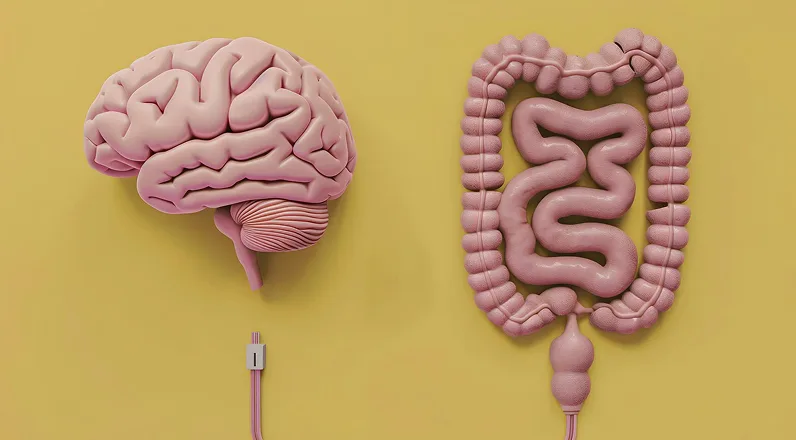
Have you ever felt discomfort in your stomach when preparing for an important presentation? That’s your brain and gut talking; your intestine has an extensive network of neurons embedded in its walls, the largest neuronal population outside the central nervous system. This “second brain” regulates the function of your digestive tract, but research shows that its role goes far beyond that. The autonomic nervous system, the enteric nervous system, the neuroendocrine system, and the immune system are all channels through which your brain and your gut are constantly communicating and influencing each other. These channels are bidirectional, so similar to how stress can make you nauseous, a troubled gut can make you stressed, anxious, or depressed.
How does your gut communicate with your brain?
Having a fuzzy feeling in your belly when you see someone you love or feeling a knot in your stomach when you’re anxious aren’t just metaphors; these are real physiologic responses to your emotions. Your brain is always influencing your gut, and the opposite is also true; a disease or disruption of your gut microbiome or gut barrier can influence your brain function and manifest in the form of brain fog, difficulty concentrating, or even mental illnesses. Your gut and brain are communicating through these channels:
- The vagus nerve: Being the longest cranial nerve, the vagus originates from the brainstem and innervates the entire digestive tract, except parts of the colon. It’s the main parasympathetic supply of the gut, and it serves as a bidirectional conduit for neural signals between the gut and the brain.
- The enteric nervous system: Formed of an extensive, complex network of neurons, the enteric nervous system has around 500 million neurons, and is the biggest collection of neurons outside the brain, this system communicates with the brain through the vagus nerve and neurotransmitters, its main function is to regulate your digestive tract, but it also influences your brain in ways science is only starting to unravel.
- The neuroendocrine system: 80% of all the serotonin in your body originates from your gut. Your digestive tract has a specialized type of cells called the enterochromaffin (EC) cells; these cells secrete neuroactive substances like serotonin, neuropeptide Y, and GABA in response to neural signals and luminal factors like food and the intestinal microorganisms that make up the gut microbiome. Unhealthy diets and gut dysbiosis will disrupt the function of this system, which reflects on both the health of your gut and your brain.
- The immune system: Bacteria in your gut lumen interact with immune cells in the intestinal wall, which in turn release cytokines that act both locally and systemically, so inflammation in your gut can spread to other organs, including the brain, causing neuroinflammation, which manifests as mental health issues.
The interaction between these four components forms what we call the gut-brain axis. As a result of this communication, chronic stress can manifest as gastrointestinal disorders like IBS and IBD; both are associated with a disrupted microbiome, implying that your mental health can change the composition of your gut microbiome. This connection also works the other way around; disturbances to the gut microbiome influence the secretion of neuroactive chemicals and neurotransmitters, which is sensed by the vagus nerve terminals and relayed back to the brain as neural signals. These signals can activate a maladaptive response in your brain, causing mental health problems, so your depression can actually originate from your gut.
The role of leaky gut.
Another way the health of your digestive system can influence your mental health is leaky gut, which happens when a compromised gut barrier allows bacteria and food particles to enter your bloodstream. This activates the immune system, triggering inflammation locally in your gut and systemically in the rest of your body. Leaky gut is linked to mental illnesses like anxiety and depression and neurodegenerative diseases like Alzheimer’s and parkinsonism.
Our approach to gut-brain health.
Instead of just treating the symptoms, we look for the root cause of your problems. Our team uses specialized tests like comprehensive stool tests, food sensitivity testing, and microbiome analysis to tailor your treatment plan to perfectly fit your specific needs. But even the best treatment plan won’t show results without your commitment to a healthier lifestyle. Pick a healthier diet that includes high-quality prebiotics and probiotics, stay hydrated, exercise regularly and avoid stress as much as possible.
The relationship between the gut and the brain is far deeper than we ever thought, and new research is constantly adding to our knowledge about this fascinating connection, highlighting the fact that a healthy gut is essential to have a healthy and clear mind.