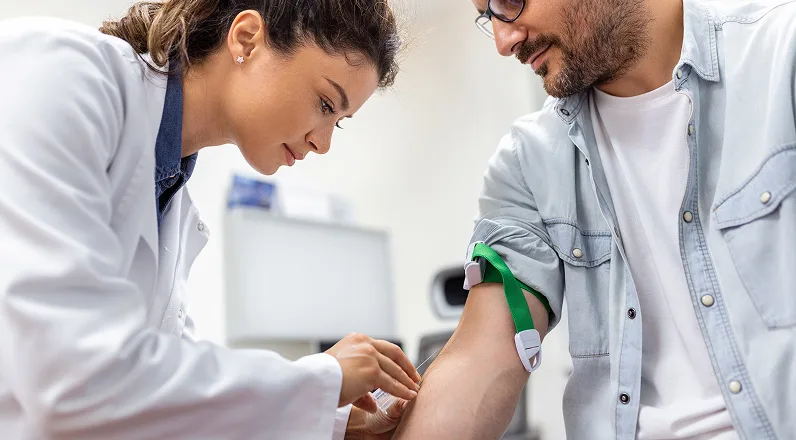
Plasma exchange serves two roles: it saves patients with life-threatening illnesses on weekdays while being a regular topic of discussion on longevity podcasts on weekends. Strip away the hype, and the idea becomes simple: remove the liquid portion of your blood, flush away harmful molecules, and replace with a clean substitute. The million-dollar (often literally) question: does that merely quiet autoimmune antibodies, or can it reverse the aging clock? Let’s take a look at the available evidence.
What is the process of plasma exchange?
It’s a simple procedure that involves these few steps:
- Collection: Blood is collected through a catheter or big-bore IV.
- Separation: A centrifuge or membrane filter divides red cells, white cells, platelets, and plasma.
- Discard: Old plasma (the antibody and cytokine-rich soup) is removed.
- Replacement: Blood is then reconstructed with the separated cellular components and either 5% albumin-saline or screened donor plasma and returned.
The process runs for roughly two hours. Patients stay awake, often wrapped in a blanket, because the returning fluid is colder than the original blood. Tingling lips from transient low calcium, some light-headedness, and post-procedure fatigue are the usual side effects; severe complications like line infections, bleeding, allergic reactions to donor plasma, and temporary immunoglobulin depletion are rare in competent hands.
Traditional applications for plasma exchange
Decades of randomized trials and guidelines place plasma exchange in mainstream care for conditions driven by circulating antibodies:
- Neurology Guillain–Barré syndrome: Associated with faster recovery and better mobility outcomes. Myasthenic crisis: Improves until immunosuppressants take effect. Autoimmune encephalitis and mitochondrial encephalopathy in pediatric patients. Autoimmunity Used for lupus flares and ANCA-associated vasculitis when steroids alone aren’t enough. Antiphospholipid syndrome: plasma exchange plus anticoagulation can avoid severe complications. Blood and Kidney Immune complex-mediated glomerulonephritis in infective endocarditis Thrombotic thrombocytopenic purpura: lifesaving first-line therapy. Goodpasture’s syndrome: Removes destructive anti-GBM antibodies. Pre-transplant desensitization when donor-specific antibodies threaten graft survival.
- Other indications include toxic epidermal necrolysis and hypertriglyceridemia induced pancreatitis.
In these scenarios, TPE is a quick and effective option: five to ten sessions over two weeks lowers antibody levels while medications handle long-term suppression.
Extra longevity and detox benefits
Longevity and biological age
Studies show that after albumin-based exchanges, inflammatory and pro-aging proteins drop into a “younger” range. Patients also report brighter skin, quicker workout recovery, and improved non-specific symptoms like chronic fatigue.
Detoxification
Because plasma is a chemical bath, replacing it will inevitably remove soluble toxins, cytokines, and heavy metal complexes. Useful in people with moderate to high exposure to toxins.
Other studies show benefits in alleviating long COVID symptoms and other post-infectious syndromes, slowing Alzheimer’s dementia progression, and improving dyslipidemia.
What to expect if you sign up
- How often: Acute diseases: daily or every other day until clinical and lab targets are met. Chronic maintenance plans: every 4–8 weeks. Longevity explorers: Varies depending on your health status and personal goals.
- During: Recliner, blanket, low hum of machinery. Bring a podcast playlist.
- Immediately After: Possible dizziness; have a driver. Normal routine usually resumes the next morning.
- Results Timeline: Autoimmune flares improve within days. Wellness goals? perceived benefits vary from days to months, but blood work improves within weeks.
- Contraindications: Uncontrolled bleeding risk, active infection at catheter site, severe cardiovascular instability. A thorough pre-screen prevents most surprises.
Plasma exchange is already a valuable tool in acute care, and the same mechanism (physically clearing pro-inflammatory and pro-aging factors) could translate into other health benefits. Early data show shifts toward a younger molecular profile, and many early users describe sharper focus, better recovery, and lighter systemic inflammation. While lifespan studies are still in progress, the trajectory is encouraging; periodic removal of biochemical clutter appears to lower the biological noise that drives degeneration and aging.
At our clinic we stay skeptical yet curious: when a therapy shows promise, we vet the science, audit the safety concerns, and personalize the plan. If plasma exchange is on your radar, schedule a data-driven consultation. We’ll map your biomarkers, risk profile, and goals, then decide whether a full plasma refresh or a less invasive strategy serves you best. Therapeutic plasma exchange represents a new strategy in personalized medicine. TPE integrates seamlessly with nutrition, exercise, sleep optimization, and stress management, creating a comprehensive approach to achieve long-term vitality. If you’re curious about adding this tool to your wellness arsenal, you know where to find us.
References
Misanovic V, Pokrajac D, Zubcevic S, Hadzimuratovic A, Rahmanovic S, Dizdar S, Jonuzi A, Begic E. Plasmapheresis in Pediatric Intensive Care Unit. Med Arch. 2016 Oct;70(5):332-335. doi: 10.5455/medarh.2016.70.332-335. Epub 2016 Oct 25. PMID: 27994290; PMCID: PMC5136426.https://pubmed.ncbi.nlm.nih.gov/27994290/
Voinov VA. Therapeutic Apheresis in Metabolic Syndrome. Immunol Endocr Metab Agents Med Chem. 2018 May;18(1):38-54. doi: 10.2174/1871522218666180608114536. PMID: 30369968; PMCID: PMC6174637.https://pubmed.ncbi.nlm.nih.gov/30369968/
Halpin M, Kozyreva O, Bijol V, Jaber BL. Plasmapheresis for treatment of immune complex-mediated glomerulonephritis in infective endocarditis: a case report and literature review. Clin Nephrol Case Stud. 2017 Apr 13;5:26-31. doi: 10.5414/CNCS109082. PMID: 29043144; PMCID: PMC5438014.https://pubmed.ncbi.nlm.nih.gov/29043144/
Weinstein R. Basic principles of therapeutic plasma exchange. Transfus Apher Sci. 2023 Apr;62(2):103675. doi: 10.1016/j.transci.2023.103675. Epub 2023 Feb 24. PMID: 36849322.https://pubmed.ncbi.nlm.nih.gov/36849322/
Porosnicu TM, Sandesc D, Jipa D, Gindac C, Oancea C, Bratosin F, Fericean RM, Kodimala SC, Pilut CN, Nussbaum LA, Sirbu IO. Assessing the Outcomes of Patients with Severe SARS-CoV-2 Infection after Therapeutic Plasma Exchange by Number of TPE Sessions. J Clin Med. 2023 Feb 22;12(5):1743. doi: 10.3390/jcm12051743. PMID: 36902537; PMCID: PMC10003394.https://pubmed.ncbi.nlm.nih.gov/36902537/
Ramirez S, Koerich S, Astudillo N, De Gregorio N, Al-Lahham R, Allison T, Rocha NP, Wang F, Soto C. Plasma Exchange Reduces Aβ Levels in Plasma and Decreases Amyloid Plaques in the Brain in a Mouse Model of Alzheimer’s Disease. Int J Mol Sci. 2023 Dec 4;24(23):17087. doi: 10.3390/ijms242317087. PMID: 38069410; PMCID: PMC10706894.https://pubmed.ncbi.nlm.nih.gov/38069410/
Kim D, Kiprov DD, Luellen C, Lieb M, Liu C, Watanabe E, Mei X, Cassaleto K, Kramer J, Conboy MJ, Conboy IM. Old plasma dilution reduces human biological age: a clinical study. Geroscience. 2022 Dec;44(6):2701-2720. doi: 10.1007/s11357-022-00645-w. Epub 2022 Aug 24. Erratum in: Geroscience. 2024 Apr;46(2):2795. doi: 10.1007/s11357-023-00997-x. PMID: 35999337; PMCID: PMC9398900.https://pubmed.ncbi.nlm.nih.gov/35999337/