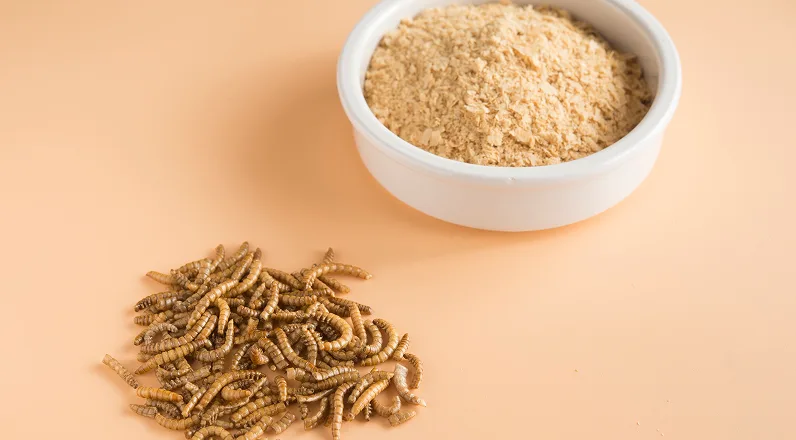
You wouldn’t guess it by looking at a garden earthworm, but a small group of enzymes hidden inside that humble creature can cut through fibrin blood clots far more precisely than many laboratory-made molecules. This earthworm extract, known as lumbrokinase, has been used in parts of Asia for decades. Lately it began to be noticed elsewhere as a measured way to thin out excessive clotting without harming the body’s normal repair work.
Brief history of lumbrokinase
Centuries ago, rural Chinese healers dried earthworms, ground them into a brownish powder called Di Long, and gave the mixture to patients who complained of “blocked channels.” They didn’t know how it worked; they simply observed that circulation and mobility often improved after taking Di Long. In the late 1980s, Japanese and Chinese researchers managed to separate six fibrin-dissolving enzymes out of Lumbricus rubellus earthworm extract and collectively named them lumbrokinase, which proved to be potent clot-dissolving agents. Those are the same enzymes you’ll find in today’s enteric-coated capsules manufactured under pharmaceutical-grade conditions. The coating lets each capsule pass safely through stomach acid before releasing in the small intestine, where absorption takes place. A typical capsule supplies roughly 40,000 activity units per twenty-milligram capsule, plenty for most maintenance protocols, yet mild enough to allow increasing the dose if a practitioner wants to push harder for stroke prevention or post-viral fatigue management.
How it works
Fibrin’s physiologic role is to patch leaks. But when inflammation or infection pushes the clotting system into overdrive, microscopic fibrin nets form in vessels and clump red cells together. Lumbrokinase addresses the problem from two angles. It removes excess fibrin directly, and it stimulates the natural secretion of anti-clotting proteins like plasmin and tPA. Because its effect is largely limited to fibrin, healthy platelets and other clotting factors are left to do their normal work.
Where it seems to help most
Cardiologists in China prescribe lumbrokinase after ischemic stroke to prevent a second event; multiple studies report fewer recurrences when it’s paired with standard therapy. Integrative doctors in North America use it for people whose labs show high fibrinogen or whose symptoms hint that their capillaries might be blocked by micro-clots. Other applications where lumbrokinase shows promise are uncontrolled, treatment-resistant angina; long COVID fatigue; and chronic Lyme disease patients that respond poorly to antibiotic treatment. Outside those main uses, smaller studies look at peripheral artery disease, diabetic kidney disease, and scar tissue remodeling after abdominal surgery.
Practical use
Dosing ranges from one capsule once daily to two capsules twice every day, depending on the indication, always at least half an hour before food. Most healthy adults tolerate lumbrokinase without issues, yet when taking it, make sure to keep these safety notes in mind:
- Use strictly under medical supervision if you have a diagnosed bleeding disorder, platelets under about 100 k, or you’re taking blood thinners.
- Stop it a week before surgery or dental extraction.
- There’s no solid research in pregnancy or lactation; best to avoid.
- Watch for unexpected bruises or nosebleeds; if they appear, report to your doctor and discuss dose adjustments.
- If you suspect a stroke or deep vein thrombosis, go to the hospital; other medications used in emergencies act within minutes, not hours.
- Look for an enteric-coated capsule with potency listed in activity units, not just milligrams of “worm powder.” Reputable manufacturers post third-party assays. Cheap bulk bottles often skip those steps; potency varies, and stomach acid can neutralize uncoated formulas long before they reach the bloodstream.
Adequate blood flow is fundamental to healthy organ function. Excess fibrin increasing plasma viscosity impairs oxygen delivery to different tissues. Purified lumbrokinase has demonstrated the ability to degrade excess fibrin while sparing normal physiologic clotting, restoring capillary patency without the bleeding tendency seen with traditional anticoagulants. Although long-term, large-scale trials are still in progress, the current evidence supports the use of lumbrokinase for patients whose coagulation markers remain elevated despite lifestyle and standard pharmacologic measures.
If you’re consistently seeing these markers in your lab results, consider discussing lumbrokinase with a trained provider or arrange a short chat with our clinical team, share your recent labs, and explore options tailored to your biology.
References
Wang KY, Tull L, Cooper E, Wang N, Liu D. Recombinant protein production of earthworm lumbrokinase for potential antithrombotic application. Evid Based Complement Alternat Med. 2013;2013:783971. doi: 10.1155/2013/783971. Epub 2013 Dec 12. PMID: 24416067; PMCID: PMC3876685.https://pubmed.ncbi.nlm.nih.gov/24416067/
Wang YH, Liao JM, Chen KM, Su HH, Liu PH, Chen YH, Tsuei YS, Tsai CF, Huang SS. Lumbrokinase regulates endoplasmic reticulum stress to improve neurological deficits in ischemic stroke. Neuropharmacology. 2022 Dec 15;221:109277. doi: 10.1016/j.neuropharm.2022.109277. Epub 2022 Oct 9. PMID: 36223864.https://pubmed.ncbi.nlm.nih.gov/36223864/
Zhu Z, Deng X, Xie W, Li H, Li Y, Deng Z. Pharmacological effects of bioactive agents in earthworm extract: A comprehensive review. Animal Model Exp Med. 2024 Oct;7(5):653-672. doi: 10.1002/ame2.12465. Epub 2024 Jul 3. PMID: 38957072; PMCID: PMC11528390.https://pubmed.ncbi.nlm.nih.gov/38957072/
Nguyen QTT, Rhee H, Kim M, Lee MY, Lee EJ. Lumbrokinase, a Fibrinolytic Enzyme, Prevents Intra-Abdominal Adhesion by Inhibiting the Migrative and Adhesive Activities of Fibroblast via Attenuation of the AP-1/ICAM-1 Signaling Pathway. Biomed Res Int. 2023 Jan 12;2023:4050730. doi: 10.1155/2023/4050730. PMID: 36685669; PMCID: PMC9851794.https://pubmed.ncbi.nlm.nih.gov/36685669/
Hua C, Guo Z, Dai M, Zhou J, Ge H, Xue G, Xu F, Ru L, Lv K, Zhang G, Zheng L, Wang M, Teng Y, Yu W, Guo W. Lumbrokinase Extracted from Earthworms Synergizes with Bevacizumab and Chemotherapeutics in Treating Non-Small Cell Lung Cancer by Targeted Inactivation of BPTF/VEGF and NF-κB/COX-2 Signaling. Biomolecules. 2024 Jun 23;14(7):741. doi: 10.3390/biom14070741. PMID: 39062456; PMCID: PMC11274885.https://pubmed.ncbi.nlm.nih.gov/39062456/